Black Holland Lop Bunny: The Self Black Holland Lop Rabbit
Self black is the least forgiving Holland Lop color on the show table, because a judge sees every rusty tip, molt line and stray white hair against that solid coat. Good preparation starts about 6 weeks before a show: shade, steady feed, daily hand grooming and a molt check. The same habits keep a pet black Holland Lop glossy at home.
Each black Holland Lop for sale on this page was raised in our barn and graded once we had checked belly color, eye circles and every toenail. A black Holland Lop bunny for sale here costs from $300 as a pet or from $400 as a show prospect, and it leaves no younger than 8 weeks, pedigree in hand.
Black Holland Lop bunnies for sale are added to the grid below after grading. If you want a single black Holland Lop rabbit for sale as a house pet, or two black Holland Lop rabbits for sale as brood stock, choose between collecting at the rabbitry in Texas by appointment and in-cabin flight delivery, with us, to a major airport near you. A small Holland Lop breeder has quiet weeks, so if no blacks are listed, join the waitlist.
A broken or a tort can hide a little: a patch of white or a band of orange draws the eye away from a molt line. A self black has nowhere to hide. Every hair from nose to tail is meant to be the same deep, even black, belly included, with dark brown eyes, and anything that breaks that sheet of color shows up under the judge's lights.
Why a Black Holland Lop Is the Hardest Coat to Show
Molt
Holland Lops go through a junior molt from roughly 8 to 16 weeks, then a senior molt, then seasonal molts after that. On most colors a half finished molt looks a little patchy. On a black it looks like two different rabbits stitched together: new jet black coat at the front, dull brownish old coat at the back, with a hard line between them. A black in mid molt will lose to a black in full coat almost every time.
Sun bleaching and rust
Black pigment fades under UV, and old hair fades further as it ages before shedding. The result is a reddish brown cast on the back, the ear tips and the top of the head. Judges fault rust and uneven color, and on a black it reads from across the room.
White hairs and white toenails
Scattered white hairs are a fault on a self. A white spot or a white toenail disqualifies the rabbit. ARBA treats removing or dyeing off colored hairs as faking, which also disqualifies, so the only fix is selecting breeding stock that does not throw them. We check toenails on every black kit at grading for this reason.
Dust and dander
Hay dust, dried urine stains on the feet and a little dandruff all look gray on black fur. A white rabbit hides them; a black advertises them.
Pre-Show Schedule for a Black Holland Lop Rabbit
This is the countdown we follow for a black we intend to show. The same steps work for any self color, but black punishes a skipped week more than the others do.
When
What we do
Why it matters on a black
6 weeks out
Check molt stage by blowing into the coat at the shoulder, hip and rump. Move the pen out of any direct sun. Confirm the rabbit is eating its usual pellets and hay well.
If a molt is just starting, the rabbit may not be in full coat by show day. Better to know now and pick a later show.
5 weeks out
Daily hand grooming begins, head to tail with a slightly damp palm, a few minutes a day. Check feet for staining and dry the pen floor.
Removes loose undercoat so new hair lies flat and reflects light.
4 weeks out
Weigh the rabbit and write it down. Seniors must stay at or under the 4 lb maximum. Keep feed steady; no sudden diet changes.
A diet change can trigger soft stools or a stressed coat at the worst time.
3 weeks out
Pose practice on a carpeted table for a minute or two each day. Check the belly and inner ears for rust or light hairs.
A rabbit that poses calmly shows its depth and crown. Belly color is part of the self standard.
2 weeks out
Look over every toenail and the chin and nose in daylight. Spot clean stained feet with a damp cloth only.
Last chance to catch a disqualification before you pay an entry fee.
1 week out
Trim nails, leaving the quick well clear. Weigh again. Hand groom twice daily.
Trimmed nails make the feet look neat and stop scratches during handling.
Day before
Final hand groom, check for loose hair, pack a clean carrier lined with fresh bedding.
A dirty carrier undoes weeks of work on a black in a single car ride.
Show day
A light pass with a damp hand before the class is called. Keep the carrier out of direct sun at the venue.
Lifts the gloss and settles flyaway hair without adding anything to the coat.
Keeping a Black Holland Lop Bunny Glossy at Home
Pet owners do not need a countdown, but a black Holland Lop bunny still looks its best with a few habits. Keep the pen away from south and west facing windows; a few hours of direct sun a day will rust the coat within a season. Feed unlimited grass hay and a measured amount of pellets, roughly 1/4 to 1/2 cup a day for an adult, since a rabbit on a steady diet grows a better coat. Hand groom a few times a week and brush daily during a molt. Our Holland Lop care guide covers housing and the full daily routine.
Rust on a pet black is cosmetic. It does not mean illness, and it fades once the next coat grows in. Patchy hair loss with flaky or red skin is different, and that is worth a vet visit.
Is Your Holland Lop Black a True Self Black?
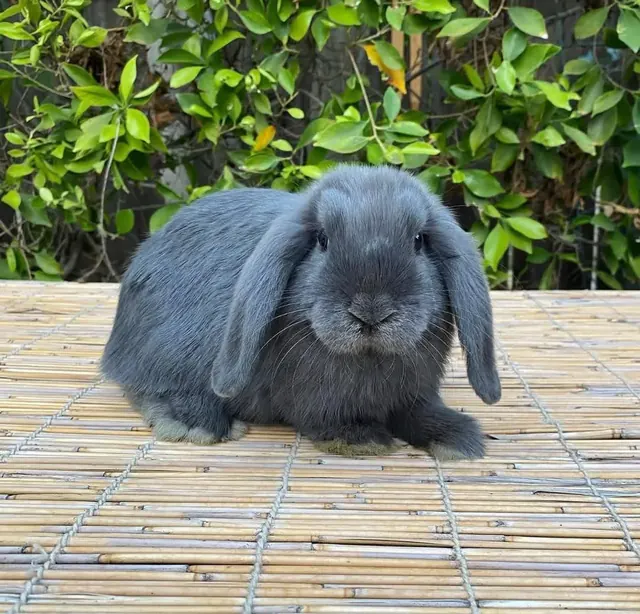
Turn the rabbit over before you plan a show season. A self black has a black belly and black eye circles. A cream belly means a black otter, and a ruby glow in the eyes under a flashlight means a seal. Dark blues can pass for black in low light, which we explain on the blue Holland Lop page. Any of these is a different color class on the Holland Lop color chart.
Questions buyers ask
Why is my black holland lop turning brown
Brown on a black Holland Lop is almost always old coat that has faded before it sheds, often sped up by sunlight. Blow into the fur at the shoulders. If the hair near the skin is jet black, the rabbit is a true black and the rust will go once the molt finishes, usually within 2 to 4 weeks. Move the pen away from bright windows to slow it next time.
Is a black vm holland lop a true black
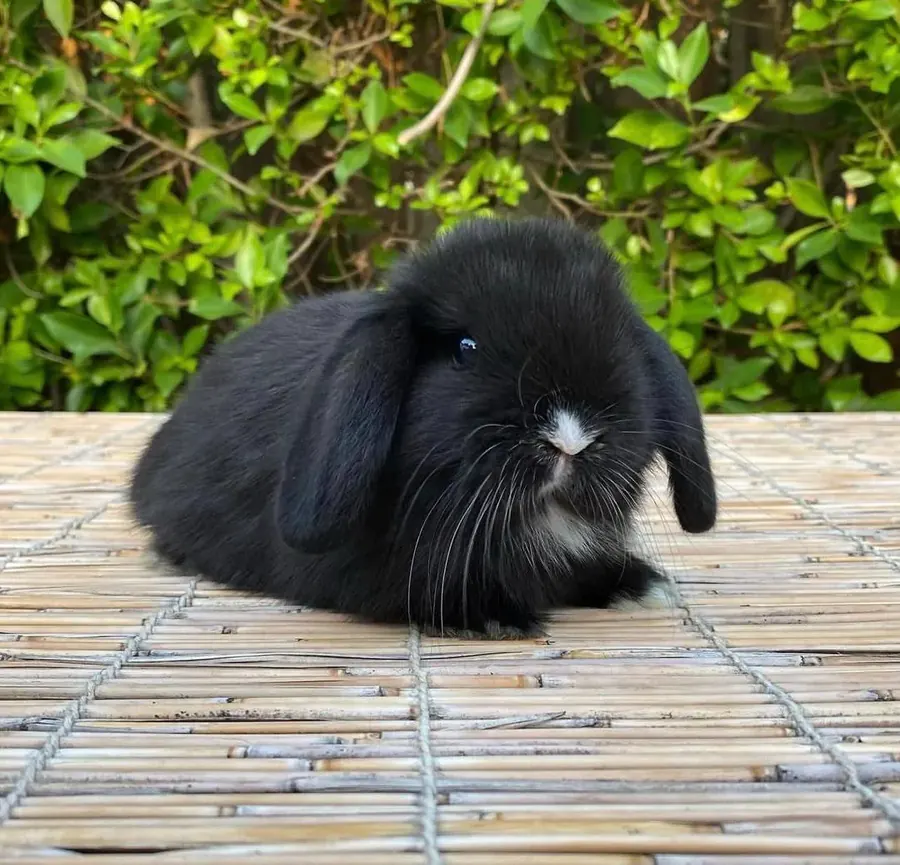
Genetically it is black, but it also carries the Vienna gene, which is why VM stands for Vienna marked. You will usually see blue or marbled eyes, a white snip on the nose or white toes. Those marks disqualify a self black from showing, so a black VM is sold as a pet or kept for breeding blue eyed whites. Its health and temperament are unaffected.
How often should i groom a black holland lop
Hand groom a black Holland Lop a few minutes a day by stroking from head to tail with a slightly damp palm, which lifts loose hair and polishes the guard coat. Use a soft brush once or twice a week, and daily during a molt. Holland Lops have dense rollback fur, so loose undercoat builds up quickly and dulls the black if you skip it.
Found your Holland Lop?
Fill out a short application so we can make sure it is a good match. We reply within 24 hours.