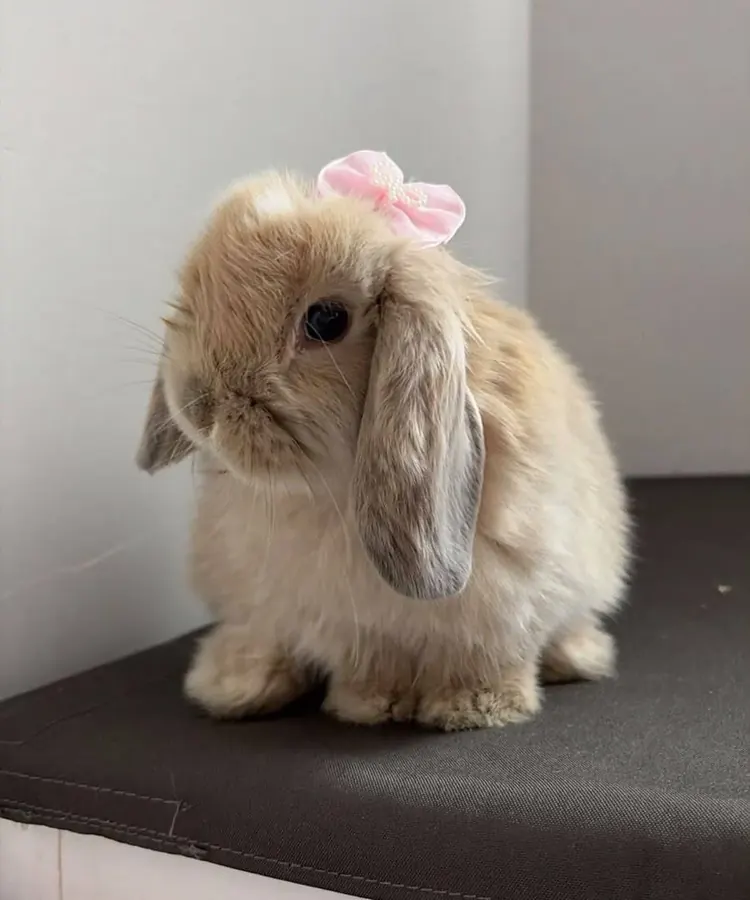
Orange Holland Lop Rabbits: Holland Lop Orange, Cream and Fawn Colors
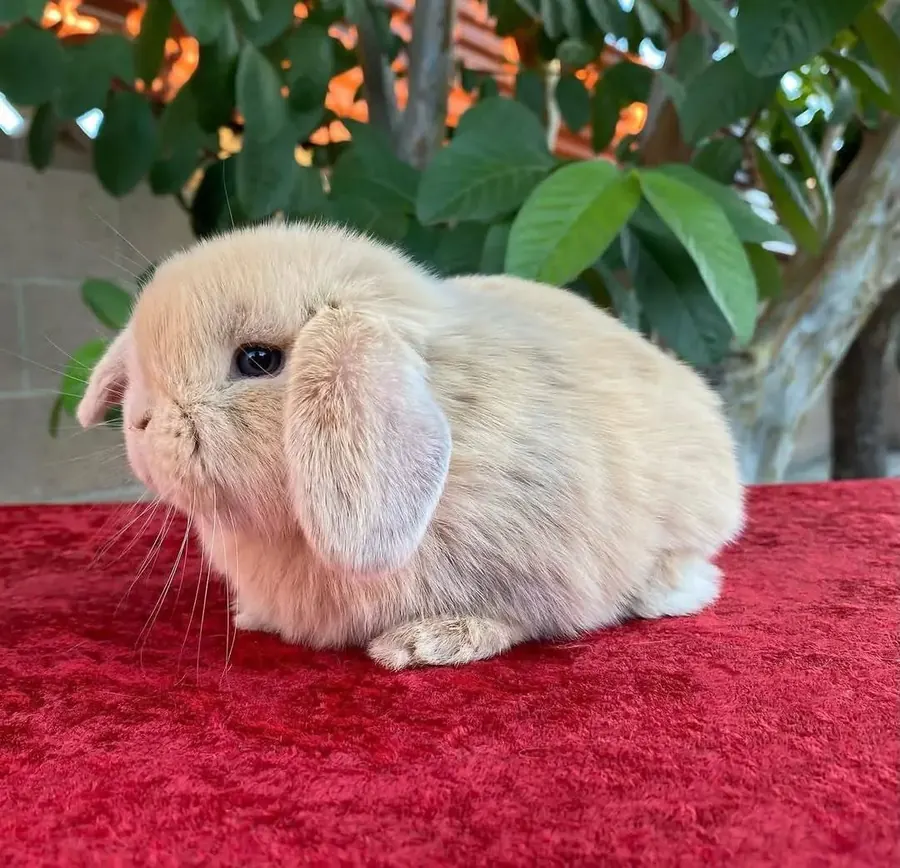
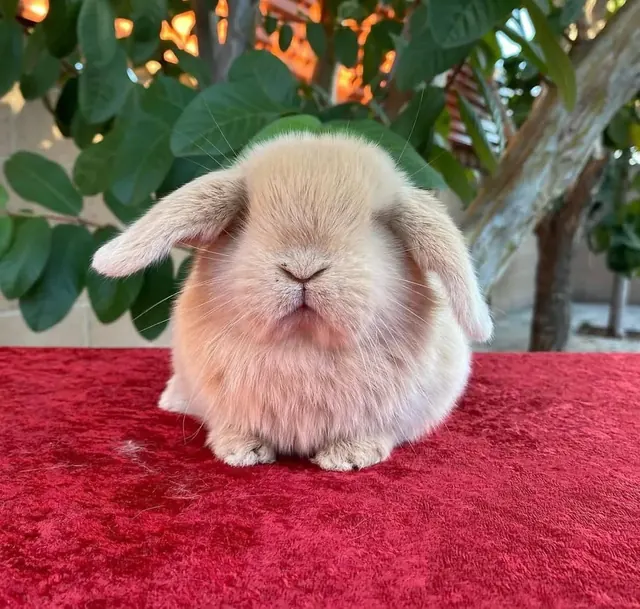
Expect an orange Holland Lop to look its richest in late winter and its palest in late summer. Sunlight bleaches the hair tips, a worn coat turns brassy just before each molt, and the fresh coat that replaces it comes in deeper. Cream, fawn and red Holland Lops follow the same yearly cycle in softer or stronger tones.
We grade our orange, cream and fawn kits at 8 weeks for structure first and coat second, since depth of color arrives with the adult coat. An orange Holland Lop for sale or a cream Holland Lop for sale from us shows up in the grid below marked with grade and sex. Expect $300 and up for a pet and $400 and up for show quality.
We are a Holland Lop breeder in Texas, and buyers in other states collect their orange or cream kit at their nearest major airport, because we fly in the cabin with each one. A kit that flies to you gets the same birth certificate, care sheet and transition feed as one picked up here, at 8 weeks or older. Our California page covers that trip. Nothing orange listed? Join the waitlist.
A bright orange kit that looks dull and almost yellow a few months after go-home worries plenty of new owners. It is almost never a health problem. It is the coat cycle, and once you know the cycle you can plan around it.
Orange Holland Lop Seasonal Coat Calendar
Orange is a pheomelanin color: the yellow to red pigment, with almost all of the black removed by non-extension (ee) on an agouti base. That pigment is the one sunlight breaks down fastest, and it shows wear more than black or chocolate. This is the pattern we see on adult oranges, creams and fawns, written as the calendar for a rabbit living indoors in the US.
Season
What the orange coat does
Cream and fawn
What we do
Late winter (January and February)
Densest coat of the year and the deepest color. Clean, even orange from crown to rump.
Creams look warmest and most even; ear tint is most visible.
Brush once a week. The best weeks for photos and for judging color.
Spring molt (March to May)
Old coat goes brassy at the tips. Shedding usually starts at the head and travels down the back, leaving a visible line between dull old coat and bright new coat.
The line is fainter; creams look patchy rather than two toned.
Brush or hand pluck loose fur daily during heavy shedding. Extra hay. Watch droppings for size and number.
Early summer (June and July)
Short, lighter summer coat. Reads a shade paler even before any fading.
Creams drift toward off white.
Pen away from windows. Room kept below 80 F.
Late summer (August)
Most faded point of the year. Tips bleach toward yellow, worst on the back and the tops of the ears.
Fawns can lose most of their gold and look like creams.
No color decisions now. Do not judge a rabbit's true shade in August.
Fall molt (September to November)
The biggest change of the year. The winter coat grows in thick and noticeably richer.
Creams regain their warmth; fawns regain gold.
Daily grooming through the heavy weeks. A weekly weigh in catches a rabbit eating less.
Early winter (December)
Coat settled, color climbing back toward its late winter peak.
Even and soft.
Back to weekly brushing.
Kits run on their own clock. The baby coat is pale, and the first molt at roughly 8 to 16 weeks replaces it with a brighter coat whatever the month. A 6 month old orange is often a full shade richer than the same rabbit at 6 weeks.
Indoor rabbits do not always follow the seasons exactly. Daylight length is the main molt trigger, and household lights blur it, so some house rabbits molt in January or shed lightly all year. Read the coat, not the calendar.
Why a Holland Lop Orange Looks Different in July and January
Three things stack up. First, the summer coat is shorter and less dense, so less color sits on top and more of the lighter undercolor shows through. Second, the tips have had months of light by summer, while a winter coat is freshly grown. Third, warm rooms push a rabbit to shed a little all the time, which keeps the coat thin. A January orange has a full, new, dense coat; a July orange has a worn, thin one. Same rabbit, same genes.
Buyers sometimes worry that a summer kit is a "washed out" orange. We grade orange kits on clean ears and nose and on structure at 8 weeks, not on depth of color, because depth comes with the adult coat and the season. That is also why we suggest judging a breeder's adults from winter photos when you can.
Sun Fading on an Orange Holland Lop Bunny
Sun fading is permanent for the hair it touches. The color does not come back; it is replaced at the next molt. Window glass blocks most UVB but lets plenty of UVA through, which is enough to bleach orange over a few weeks. A pen in a sunroom or beside a sliding door is the usual cause of a patchy, two toned orange.
Place the pen at least several feet from any window that gets direct sun, or keep blinds closed during the sunny hours.
Skip outdoor time in midday sun. A short session in shade does no harm.
Keep the room between 60 and 75 F. Heat drives constant light shedding, and a Holland Lop in a room above 80 F is at risk of heat stress, which matters more than any coat.
Grooming an Orange Holland Lop Through a Molt
Holland Lops have a short rollback coat, so most weeks a brush once over is enough. During a heavy molt the loose fur comes out in tufts, and a rabbit grooming itself swallows a lot of it. Rabbits cannot vomit, so swallowed hair has to pass through the gut. In heavy weeks we:
Hand pluck the loose tufts gently. If fur does not release with a light pull, leave it.
Follow with a soft rubber grooming mitt from head to tail to lift the rest.
Offer more hay than usual. Long fiber moves swallowed fur along; our Holland Lop diet guide covers daily amounts.
Count droppings. Smaller, fewer or strung together droppings mean the rabbit needs attention that day, not next week.
Smutty Orange Holland Lop Coats and the Molt
Smut is dark, sooty hair on the ears, nose, eye whisker beds or down the spine. Light smut is common on young kits and usually fades as the baby coat goes. What stays after the first molt usually stays for life. In our experience smut also looks heavier on a faded coat, because the orange around it has lost its depth. Look again after the fall molt before deciding a rabbit is heavily smutty.
Orange is easy to mix up with a tort, which also has an orange body but carries smoky shading on the belly and points. The shading on a tort is the pattern, not a fault. Our tort Holland Lop page shows the difference.
Cream Holland Lop, Fawn and Red Shades
All four are agouti, non-extension rabbits with a white belly, a light jaw and light eye circles, shown in the ARBA Wideband group. Cream is the dilute of orange and the palest, and it fades the least visibly because there is less color to lose. Fawn sits between cream and orange; how it is produced is still debated among breeders, and the same rabbit may be called fawn in one pedigree and cream in another. Red is orange with modifiers that deepen it to rust, and it shows sun damage the most. Whichever shade you choose, the calendar above applies.
Orange, cream and fawn kits show in the grid below whenever we have them, and every available Holland Lop is listed in one place too.
Questions buyers ask
What is a smutty orange holland lop
A smutty orange Holland Lop has dark hairs on the ears, nose, eye whisker beds or along the back that dull the clean orange. Light smut is common in a kit's baby coat and often clears with the first molt between 8 and 16 weeks. Heavy smut on an adult is a show fault and tends to run in families, but it has no effect on health.
Why does my orange holland lop look faded
Usually it is an old coat. In the weeks before a molt the hair tips have been exposed to light for months and turn brassy or yellowish. Sun through a window speeds that up. Once the rabbit molts, the new coat grows in at full depth. If the fading is patchy and the rabbit is not shedding, move the pen away from windows and give it one molt cycle.
How often do holland lops molt
Most adult Holland Lops have two heavier molts a year, in spring and in fall, with lighter shedding between. Kits go through a baby coat molt at roughly 8 to 16 weeks and a junior molt a few months later. Indoor rabbits under household lighting sometimes molt off schedule, so watch the coat rather than the calendar.
What is the difference between a cream and a fawn holland lop
Cream is the dilute of orange: the same agouti, non-extension rabbit with two copies of the dilute gene, giving a pale, warm cream that often shows a faint lilac tint on the ears. Fawn sits between cream and orange in depth. Breeders do not all agree on how fawn is produced, and the names vary between pedigrees, so judge the shade in daylight.
Is a red holland lop just a dark orange
In practice, yes. A red Holland Lop has the same genetic base as an orange, with color modifiers (often called rufus factors) that push the shade to a deep rusty red. Breeders build red over generations by keeping the richest colored rabbits. Many rabbits sold as red are strong oranges, so ask to see a molted adult coat on one of the parents.
Found your Holland Lop?
Fill out a short application so we can make sure it is a good match. We reply within 24 hours.