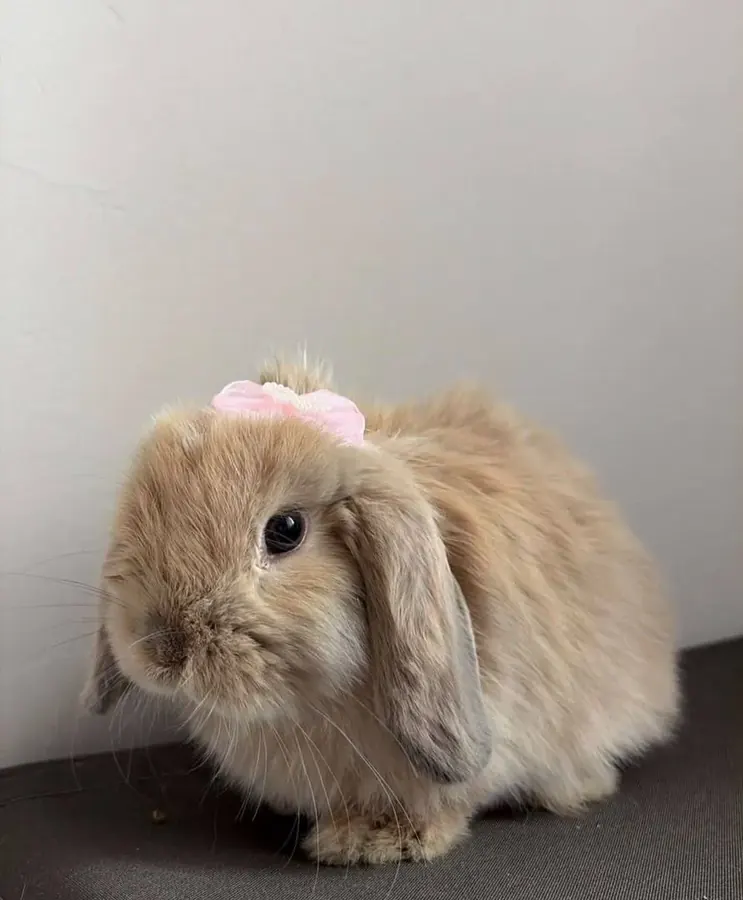
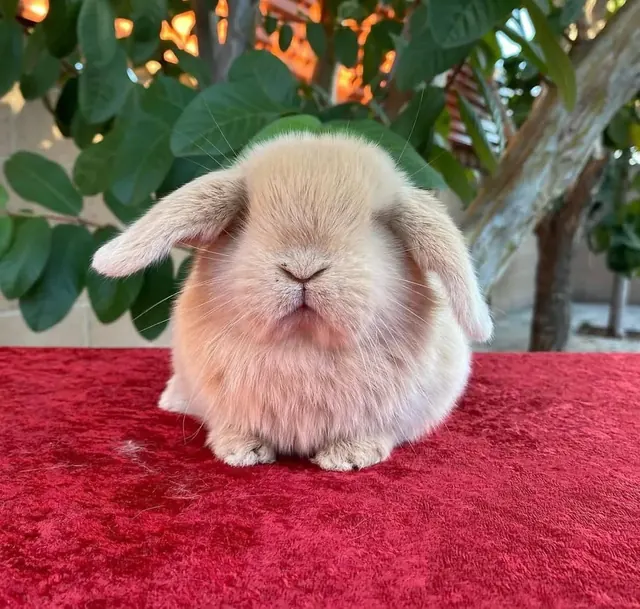
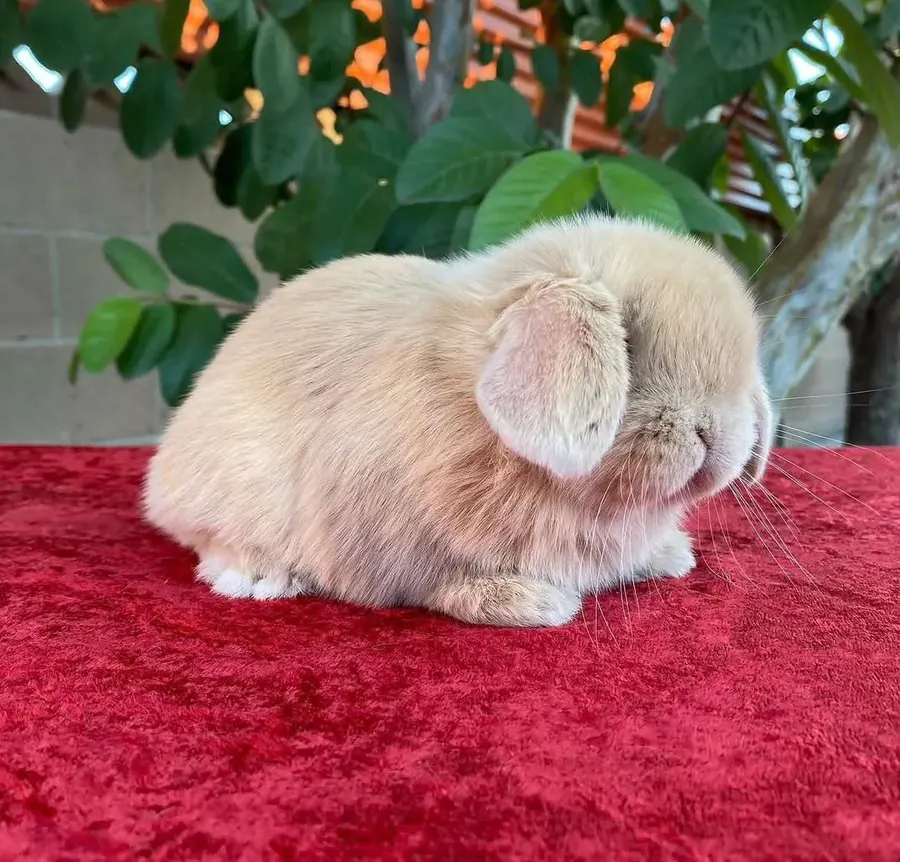
Broken Holland Lop and Black and White Holland Lop Bunnies
Pair a broken Holland Lop with a solid and, on average, half the litter comes out broken and half solid. Pair two brokens and the odds shift to one solid, two brokens and one Charlie in every four kits. That second pairing is the one we avoid, and the reason has as much to do with health as with the show table.
We read a broken kit's markings from the day it is born and grade it at 8 weeks, so before pickup you know which grade your kit falls in and why. A black and white Holland Lop bunny for sale from our barn leaves with its birth certificate, transition feed and a care sheet. Pets start at $300; show prospects start at $400.
Searching for a Holland Lop broken orange for sale, or a broken blue? The grid below lists only the broken kits open right now. Kits leave at 8 weeks or older, either collected from our Texas barn by appointment or flown, with one of us, in the cabin to your closest major airport. Our litters are few, so this Holland Lop breeder keeps a list: join the waitlist if nothing fits yet.
Every broken Holland Lop carries one copy of a dominant gene, En, on top of its base color. That single fact drives everything on this page: what a pairing produces, why some kits come out nearly white, and why we plan broken litters the way we do.
Broken Holland Lop Litter Odds for Every Pairing
These are the Mendelian averages for the broken gene alone. En is the broken gene, en is solid. Base color (black, orange, blue and so on) is inherited separately and does not change these percentages.
Pairing
Parent genes
Solid kits
Broken kits
Charlie kits
Solid x solid
en en x en en
100%
0%
0%
Broken x solid
En en x en en
50%
50%
0%
Broken x broken
En en x En en
25%
50%
25%
Charlie x solid
En En x en en
0%
100%
0%
Charlie x broken
En En x En en
0%
50%
50%
Two things to keep in mind. First, these are odds per kit, not a promise per litter. A broken to solid pairing can give an all solid litter of four, and the next litter from the same pair can be all broken. Second, the broken gene cannot hide. A solid rabbit carries no broken gene at all, so two solids never produce a broken kit, whatever their pedigree says.
Broken black Holland Lop bred to a solid
This is the pairing we use. It gives a useful mix of broken and solid kits, it never produces a Charlie, and it lets us pair a broken with a solid that has the head, crown or body we want to strengthen. If you see a breeder advertising a litter of black and white Holland Lop bunnies, a broken black bred to a solid black is the most likely parentage.
Broken bred to broken
Breeders sometimes pair two brokens because both are strong on type. The trade is a 1 in 4 chance of a Charlie in every kit. If you are buying a broken from a broken to broken litter, ask whether any littermates were Charlies and how they are doing.
Getting a Holland Lop broken orange from a pairing
Base color and pattern are inherited separately, so a broken orange needs both lined up. Pair a broken orange with a solid orange and about half the kits come out broken, all of them orange based. Pair a broken black with a solid orange and you only get orange based kits if the black carries non-extension, and even then only about 1 kit in 4 is a broken orange or broken tort.
Charlie Holland Lops: the Double En Kit
A Charlie is a kit that inherited En from both parents. It comes out mostly white, often with colored ear tips, a partial or one sided nose marking (the so called mustache), and a few small body spots. Some Charlies show so little color they get mistaken for a ruby eyed or blue eyed white at a glance, though their eyes match their base color.
The health concern is real but specific. In spotted breeds such as the Checkered Giant and English Spot, the En En genotype has been linked to megacolon, a condition where the large intestine does not move food along properly. Affected rabbits can show chronic soft stools, small or misshapen droppings, weight that is hard to keep on, and repeated bouts of gut slowdown. Not every Charlie is affected, and many live normal lives, but the risk is the reason we do not plan broken to broken pairings, and why anyone taking home a Charlie should talk with the breeder about feeding and gut health first.
How to Read Holland Lop Black and White Markings
For a pet, any pattern you love is the right pattern. For show, a judge looks at the markings in a set order, and so do we when we grade broken kits at 8 weeks. The pattern is visible on the skin from day one, so by 8 weeks we know exactly what we have.
The butterfly
The colored marking across the nose should look like a butterfly, with the body over the bridge of the nose and a wing out onto each cheek. A full, even butterfly is the best of the broken face. One wing missing, or a nose marking that only covers one side, reads as a weaker pattern.
Eye circles
Each eye should sit inside a ring of color. Circles do not have to be identical, but a missing circle on one side is a clear pattern fault.
Ear color
Both ears should be colored. A white ear, or one with a large white streak, is something we always point out to show buyers.
Spot balance
Brokens are either spotted, with color in scattered spots over a white base, or blanket, with a saddle of color over the back. On a spotted rabbit we want spots on both sides of the body, not all crowded to one flank. On a blanket we want the color to stop short of the face and feet so the white frame stays clean.
Black and White Holland Lop and Other Colors Under the White
The colored patches are judged like the solid version of that color, so a broken is really two judgments at once: pattern, then color.
Holland Lop bunny black and white: the broken black
The classic black and white Holland Lop is a broken black, and its patches should be as deep as a self black, with no rust at the edges. White hairs creeping into the black patches are a fault, though on a pet they change nothing.
Broken orange Holland Lop and broken cream
A broken orange Holland Lop should show warm, clear patches without dark smut creeping into them, and broken cream is the paler dilute version. Both are agouti colors, so the colored patches carry the lighter belly and eye circle shading of a solid orange.
Broken blue Holland Lop and broken lilac
A broken blue Holland Lop shows slate patches with blue-gray eyes; broken lilac is the dove toned version. Both need dilute from each parent, the same as their solid forms.
Tri-colors, sable points and frosties
A broken sable point or broken frosty carries its shading inside whatever patches land on the ears and nose. A tri-color is a broken harlequin, covered with its banding on our harlequin and magpie page, and the Holland Lop color chart lists every base color that can sit under the white.
Questions buyers ask
Can two broken holland lops have a solid baby
Yes. Each broken parent carries one broken gene and one solid gene, so each kit has a 1 in 4 chance of getting the solid gene from both. On average a broken to broken litter is one quarter solid, half broken and one quarter Charlie. In a small litter of 3 to 5 kits the real split can land well away from those numbers.
Why are charlie holland lops not shown
A Charlie has two copies of the broken gene, which leaves it mostly white with only a few spots of color, often missing a full nose marking or eye circles. It lacks enough color to meet the broken pattern standard, so it cannot place on the show table. Many Charlies live as healthy pets, but buyers should ask about digestive health because of the megacolon link.
Is a black and white holland lop always a broken
Usually, but not always. Most black and white Holland Lops are broken blacks, with a white base and black ears, eye circles and nose marking. A black magpie also shows black and white, but in bands and blocks rather than spots. A black with one small white spot or white toes is a Vienna marked solid, which is a different gene entirely.
What is a broken tri-colored holland lop
A tri-colored Holland Lop is a broken harlequin: the broken gene adds white to a rabbit already carrying black and orange harlequin bands, so you see three colors. It is shown in the Broken group. A good tri needs both clean harlequin separation and a balanced broken pattern, which is why well marked tris are harder to produce than broken blacks or broken oranges.
Found your Holland Lop?
Fill out a short application so we can make sure it is a good match. We reply within 24 hours.