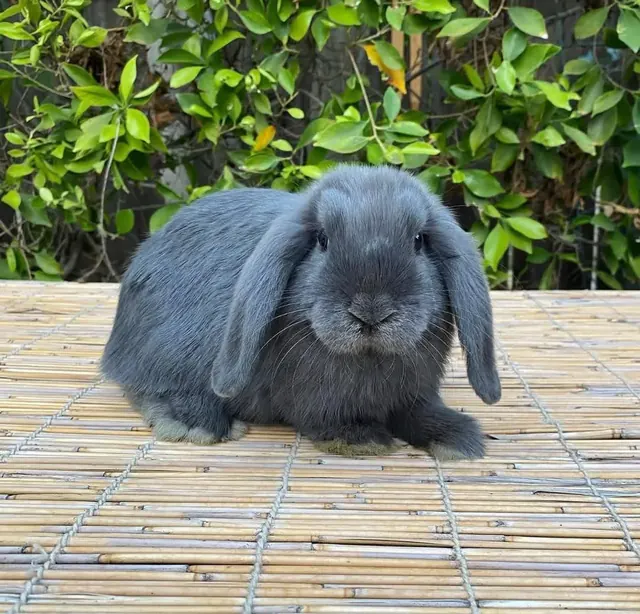
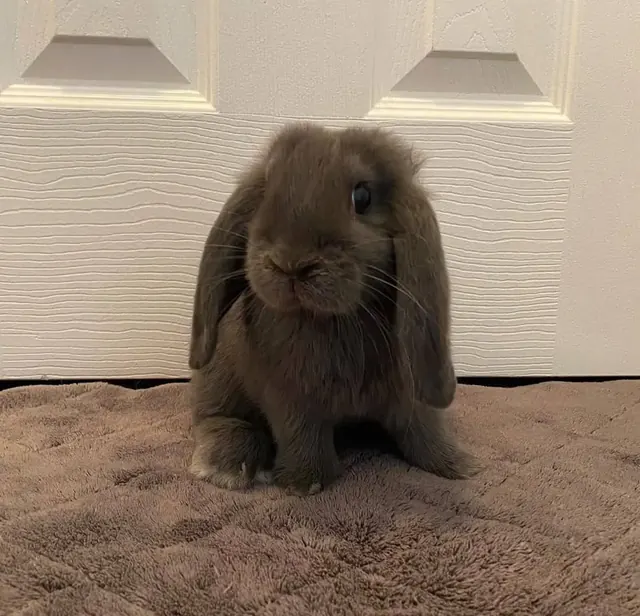
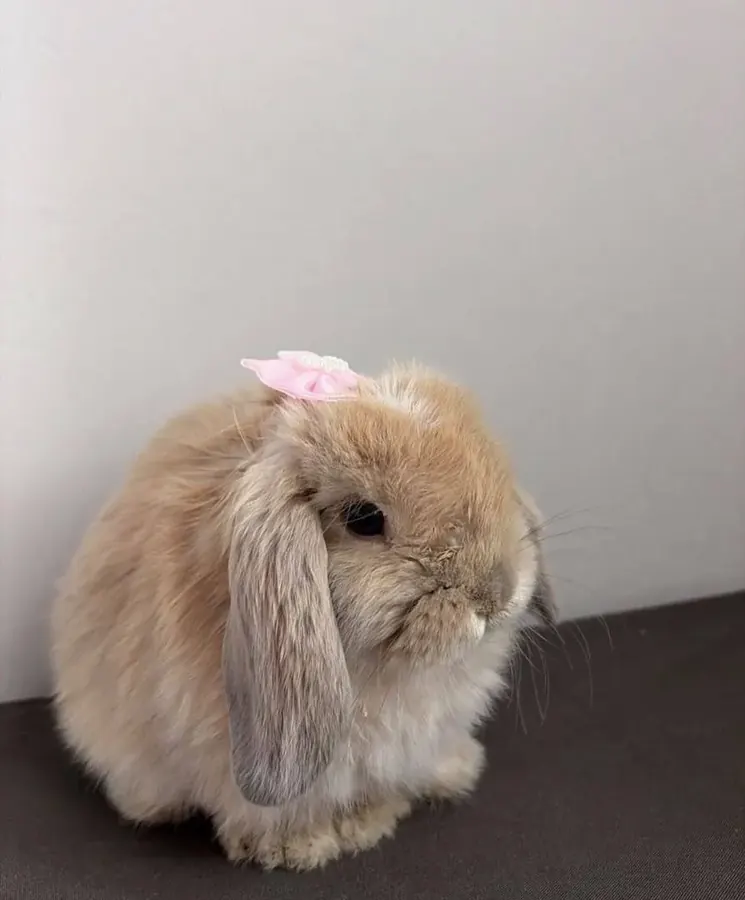
Harlequin Holland Lop and Magpie Holland Lop Bunnies
Harlequin Holland Lops are harder to find because the harlequin gene is recessive to full color, many pairings give only part of a litter in the pattern, and of the harlequin kits born, only some have the clean banding buyers picture. Magpies are scarcer still, since they also need the chinchilla gene to turn the orange bands white.
Our harlequin and magpie kits are raised in our climate-controlled barn and graded at 8 weeks, with the face, the edges between colors and the ear backs scored alongside type. Harlequin Holland Lops for sale from us come with a birth certificate, care sheet and transition feed and leave no earlier than 8 weeks. Pricing is by grade: $300 and up for pet quality, $400 and up for a show prospect.
Type harlequin Holland Lop for sale near me into a search bar and a nearby litter is unlikely to appear, which is why we offer in-cabin flight delivery to the nearest major airport in any US state, as well as pickup in Texas. Any harlequin Holland Lop rabbits for sale appear in the grid below. When it is empty, join the waitlist so this Holland Lop breeder knows to contact you once harlequin kits are graded.
Buyers ask us for harlequins more often than litters can supply them, and it is not because breeders are holding them back. The pattern sits low in a gene series, splits litters, and then leaves a lot to chance once the kit is born. Here is each step, in the order it narrows the odds.
Where the Harlequin Holland Lop Gene Sits in the Extension Series
The extension gene controls how far black pigment spreads over a rabbit. It has several versions, called alleles, ranked from most to least dominant:
Dominant black (E^D) and steel (E^s): extra black, rarely seen in Holland Lops.
Full extension (E): normal spread, found in self blacks, chestnuts, otters and most common colors.
Harlequin (e^j): black switches on and off in patches, so orange shows through in bands.
Non-extension (e): black pulled back to the points, as in torts and oranges.
A rabbit shows the highest ranked allele it carries. Harlequin beats non-extension but loses to full extension. So a black carrying one harlequin copy looks completely black, and the gene can pass quietly through several generations before two carriers meet. For the classic look, the rabbit also needs to be non-agouti (aa), like a self or a tort. An agouti harlequin has ticked, banded hair inside its patches and looks muddier.
Harlequin Holland Lop Pairings and the Share of Harlequin Kits
These are Mendelian averages for the extension gene only, assuming both parents are non-agouti. Litters of 3 to 5 kits often land away from the average, in both directions.
Pairing
Extension genes
Harlequin kits
The rest of the litter
Harlequin x harlequin
e^j e^j x e^j e^j
100%
None
Harlequin x tort
e^j e^j x ee
100%
None, though all carry tort
Harlequin carrying tort x harlequin carrying tort
e^j e x e^j e
75%
25% tort
Harlequin x black carrying harlequin
e^j e^j x E e^j
50%
50% black, carrying harlequin
Harlequin carrying tort x tort
e^j e x ee
50%
50% tort
Black carrying harlequin x black carrying harlequin
E e^j x E e^j
25%
75% black, two thirds of them carriers
Harlequin x black with no harlequin
e^j e^j x EE
0%
100% black, all carriers
That last row surprises people. A stunning harlequin bred to a plain black can produce a litter with no harlequins at all. Most outcrosses for type, the pairings that improve head, crown and body, fall in the bottom half of this table, which is why a breeder working on structure gets fewer harlequins than one breeding harlequin to harlequin every time.
Why a Magpie Holland Lop Also Needs Chinchilla
A magpie Holland Lop is a harlequin with the orange removed. The gene that removes it is chinchilla (c^chd), from the separate color series that also gives us the chinchilla and squirrel colors. Chinchilla strips yellow pigment, so the orange bands turn white or pearl while the black bands stay black.
The catch is that full color (C) is dominant over chinchilla. A kit only turns magpie if it inherits no full color allele, which in most pairings means getting chinchilla from both parents. So a magpie needs two separate recessive conditions met at once: harlequin at extension and chinchilla at the color series. If each has a 1 in 4 chance in a given pairing, the chance of both lands near 1 in 16. That is the arithmetic behind a black magpie Holland Lop, and it applies equally to blue, chocolate and lilac magpies.
Blue Fawn Harlequin Holland Lop and Other Dilute Shades
Add two copies of the dilute gene to a harlequin and every band softens: black turns slate blue, orange turns fawn, and the eyes turn blue-gray. That rabbit is the blue harlequin, and because dilute is recessive it needs a carrier on both sides of the pedigree as well as harlequin itself. Stack that on the odds above and you can see why dilute harlequins are even scarcer than black ones.
Blue cream harlequin Holland Lop: one rabbit, two names
Some breeders call the light bands fawn, others cream, so a blue cream harlequin Holland Lop and a blue fawn harlequin are the same color. Judge the contrast: on a dilute harlequin the two shades sit closer together, so a crisp edge between bands matters even more than on a black and orange rabbit.
Why Clean Banding Is Rare on a Harlequin Holland Lop
Getting the gene is only half of it. No gene tells the patches where to go, so the layout is different on every kit, even full siblings. Judges and most buyers want the same picture: a face split cleanly down the middle, the ear on the dark side light and the ear on the light side dark, and bands that alternate around the body and down the legs. Very few kits hit all of that.
Two other things work against a harlequin Holland Lop. The breed's short, compact body leaves little room for bands, so they tend to run together into blotches. And brindling, dark hairs mixed into the orange areas, blurs the edges between colors and usually gets heavier with age. When we grade a harlequin kit at 8 weeks we look at the face first, then the sharpness of the edges, then the ears from behind. A kit with brindled ear backs at 8 weeks nearly always ends up with smutty ears as an adult.
Waiting for a Harlequin Holland Lop or Magpie
Put the steps together. A planned harlequin pairing may give a full or partial harlequin litter, then only some of those kits have a well split face, then the show quality ones need good type as well. We keep a small herd and raise only a few litters each season, so harlequin kits do not appear in every litter. Our honest advice is to decide what matters to you: a show harlequin with ideal banding is a long wait anywhere, while a pet harlequin with an uneven face and a lovely temperament comes up far more often. Pricing follows quality grade, not color, as our Holland Lop price guide explains.
Yes. Harlequin is a recognized Holland Lop color and is shown in the AOV group, where judges look for clear separation between the dark and light bands, a split face and alternating ears. Type still counts for most of the score. Tri-colors, which are broken harlequins, compete in the Broken group instead. Judges fault brindled, blurred edges between the bands.
Can a harlequin holland lop have non harlequin babies
Yes, depending on the partner. Bred to a self black that carries no harlequin, every kit looks black and carries harlequin hidden. Bred to a black that carries harlequin, about half the kits are harlequin. Two harlequins that both carry tort can also produce tort kits, roughly one in four. Only a harlequin bred to a harlequin or a tort gives an all harlequin litter.
How is a black magpie holland lop different from a broken black
The layout gives it away. A black magpie has black and white in alternating bands and blocks, often with a face split down the middle, and the white areas usually have a pearl or gray cast. A broken black has a pure white base with black spots or a blanket on top, plus a butterfly nose marking. They come from different genes and are shown in different groups.
Is a vm harlequin holland lop showable
No. VM means Vienna marked: the rabbit carries the Vienna gene, which usually shows as bright blue or marbled eyes plus white on the muzzle or feet. Those marks disqualify a harlequin on the show table just as they do a solid color. A VM harlequin is healthy and makes a fine pet, and its banding and personality are no different from any other harlequin.
What does a harlequin holland lop kit look like at birth
A newborn harlequin often has mottled skin, darker in patches and lighter in others, while its littermates have even skin tones. Once fur arrives around day 7, the dark areas look gray and the light areas look pale. By 3 weeks the real layout of the bands shows, and that is when we first judge whether the face is split.
How long is the wait for a harlequin holland lop
There is no fixed wait. It depends on which pairings we have planned for the season and how many harlequin kits those litters produce, which the odds can only estimate. The fastest route is to apply and tell us you want a harlequin or magpie. Your deposit can transfer once to a future litter if the current one has no harlequin that suits you.
Found your Holland Lop?
Fill out a short application so we can make sure it is a good match. We reply within 24 hours.