Smokey
$300- Sex
- Doe / Female
- Age
- About 3 months
- Ready
- Now
- Color
- Chinchilla grey
- Quality
- Pet
Blow gently into the fur on your rabbit's back and read the ring that opens up. That ring, plus belly color and eye circles, tells you whether a grey Holland Lop is a chinchilla, squirrel, opal, self blue or blue otter, or a chestnut that only photographs grey. Grey is not an ARBA color name, so the ring settles it.
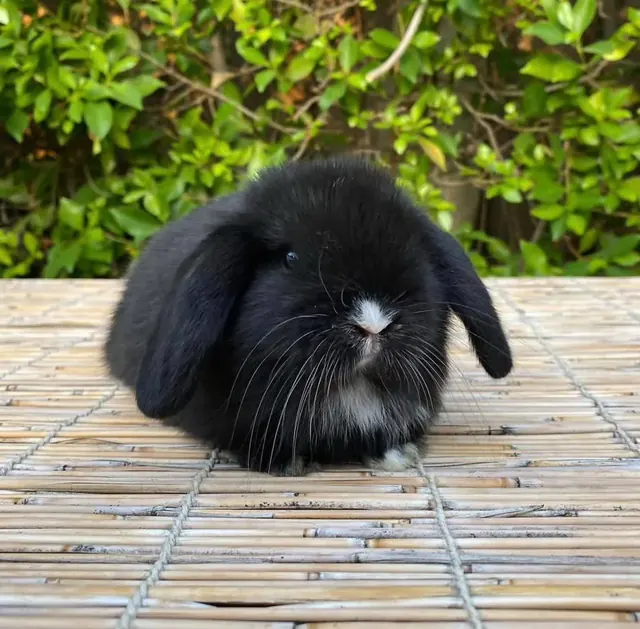
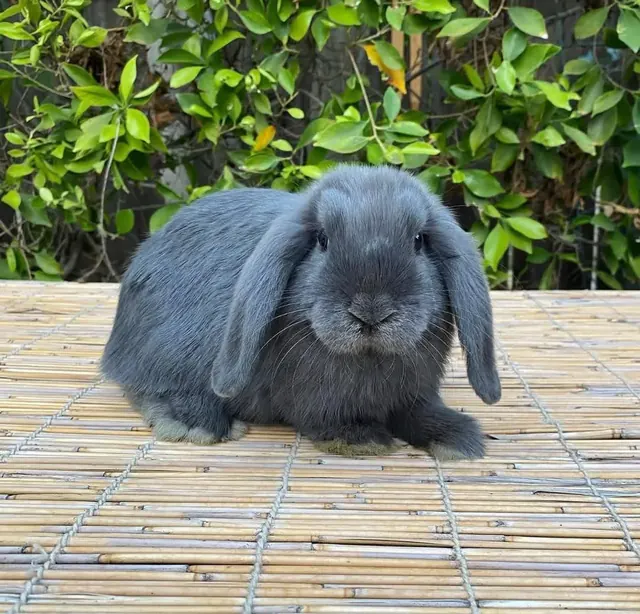
Nothing available in this color right now. Join the waitlist and we will tell you when the next litter arrives. Join the waitlist.
When we raise chinchilla, squirrel, opal or blue kits, we read every coat with the blow test before a color goes on the pedigree, so a grey Holland Lop for sale from us carries its real color name. Gray Holland Lop bunnies for sale, like all grey Holland Lops for sale here, are posted below once graded. A pet grade grey costs from $300, a show grade one from $400.
A grey Holland Lop bunny for sale or a gray Holland Lop bunny for sale from us travels home no earlier than 8 weeks, with a birth certificate, care sheet and transition feed, either from our rabbitry by appointment or on an in-cabin flight we take with the bunny. If no gray Holland Lop for sale is listed, or no Holland Lop grey for sale in the shade you want, join the waitlist and tell this Holland Lop breeder which grey you are after.
We use one test for every grey kit in our barn before we write a color on its pedigree: hold it still, blow into its back, and read the hair from the skin out. You can do the same at home with any gray Holland Lop rabbit, and you will get a more reliable answer than any photo or listing title.
Set the rabbit on your lap or a towel on a table, facing away from you, near a window with daylight but no direct sun. Warm indoor bulbs make every grey look browner. Then:
Then turn the rabbit over, supporting its back against your body, and look at the belly and the inside of the back legs. Finally, look at the eyes in daylight and at the fur ringing each eye. Those three readings are all the key below needs.
Work through the steps in order. Each step either names the color or sends you to the next one.
The same key as a reference table, useful when you are comparing two kits in one litter.
| Color | Ring, skin to tip | Belly | Eye circles | Eyes |
|---|---|---|---|---|
| Chinchilla | Slate blue, pearl white, black | White | Pearl | Brown |
| Squirrel | Slate blue, pearl white, blue | White | Pearl | Blue gray |
| Chestnut | Slate blue, orange, black | White | Light cream | Brown |
| Opal | Slate blue, fawn, blue | White | Light cream | Blue gray |
| Lynx | Near white, orange, lilac | White | Light | Blue gray |
| Self blue | Slate blue throughout, no band | Slate blue | None | Blue gray |
| Blue otter | Slate blue throughout on the back | Cream or white, fawn border | Light | Blue gray |
Two shortcuts fall out of the table. Brown eyes on a grey rabbit narrow it to chinchilla or chestnut, because the dilute gene that makes squirrel, opal, blue and lynx also lightens the eyes to blue gray. And a white belly with rings always means agouti. For more on the solid grey, see our self blue Holland Lop guide.
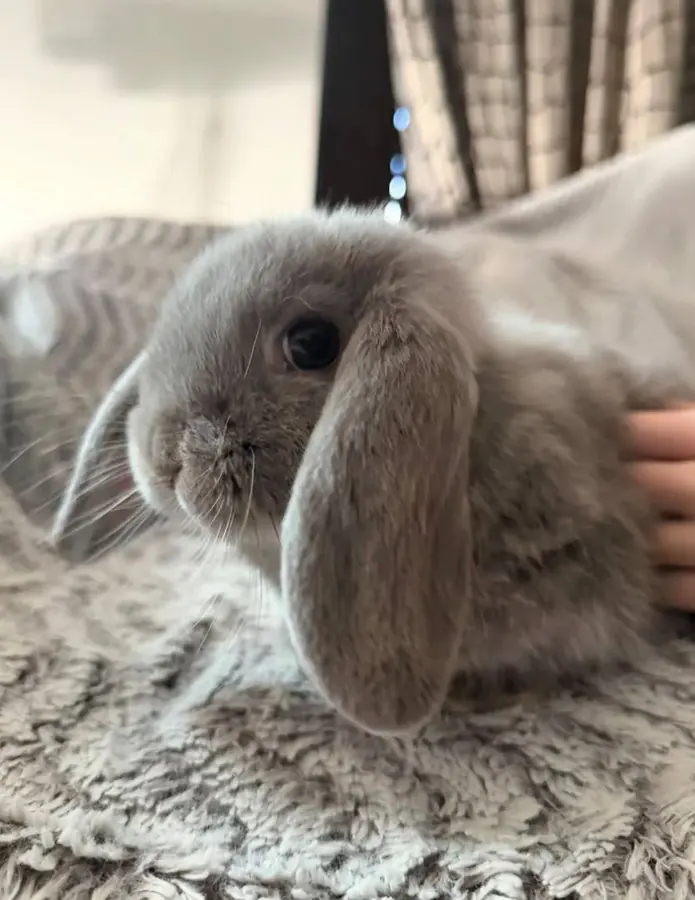
Fur comes in around day 7, and in our nest boxes we usually get a readable ring between 2 and 3 weeks. Before that, the coat is too short to part cleanly. A chinchilla's baby coat can carry a brownish wash over the hips at 4 to 8 weeks that makes it look like a pale chestnut; the ring tells the truth, because the middle band is still pearl. Most of that wash clears at the first molt, usually by 16 weeks.
Old hair at the end of its cycle fades at the tips, and a chinchilla's black tips can read brownish. Blow into a patch of new, short coat if you can find one. On an opal, the fawn band often looks stronger on fresh coat.
Chestnut is the most common surprise. Under shade or blue toned evening light, a pale chestnut can pass for grey in photos, and the ring is the only quick way to be sure. If the band is orange, the rabbit belongs on our chestnut and chocolate Holland Lop page, not this one.
A few rarer greys do not fit. Steel shows silver or gold tipping across a dark coat without clean agouti bands. Frosty is near white with gray shading on the points. The Holland Lop color guide covers both. If your reading still does not match anything here, a video of the blown coat and the belly in daylight is usually enough for us to give an opinion.
Any grey kit we raise shows up in the grid below once it is ready to list, and the Holland Lops for sale page gathers every color.
A chinchilla Holland Lop is an agouti rabbit with the chinchilla allele (c^chd), which strips the yellow out of each hair's middle band. Blow into the coat and you see slate blue at the skin, a pearl white band and black tips. It has a white belly, pearl eye circles and brown eyes, and is shown in the ARBA Agouti group.
Usually a blue otter: a solid slate blue top with a cream or white belly, light eye circles and a warm fawn border where the top color meets the belly. Blowing into the back shows no rings, which separates it from an opal. It comes from the tan pattern gene on a blue rabbit and competes in the Tan Pattern group.
Sellers use blue grey for two rabbits. If the coat shows no rings and the belly matches the back, it is a self blue, an even slate color with blue gray eyes. If the coat shows a pearl band and blue tips with a white belly, it is a squirrel. Blow into the back to tell which one you have.
No, a squirrel is the dilute version of a chinchilla. Both show a pearl white middle band and a white belly, but a chinchilla's tips are black and its eyes brown, while a squirrel's tips are slate blue and its eyes blue gray. Side by side, the squirrel looks softer and lighter. A squirrel needs the dilute gene from both parents to appear.
Fill out a short application so we can make sure it is a good match. We reply within 24 hours.