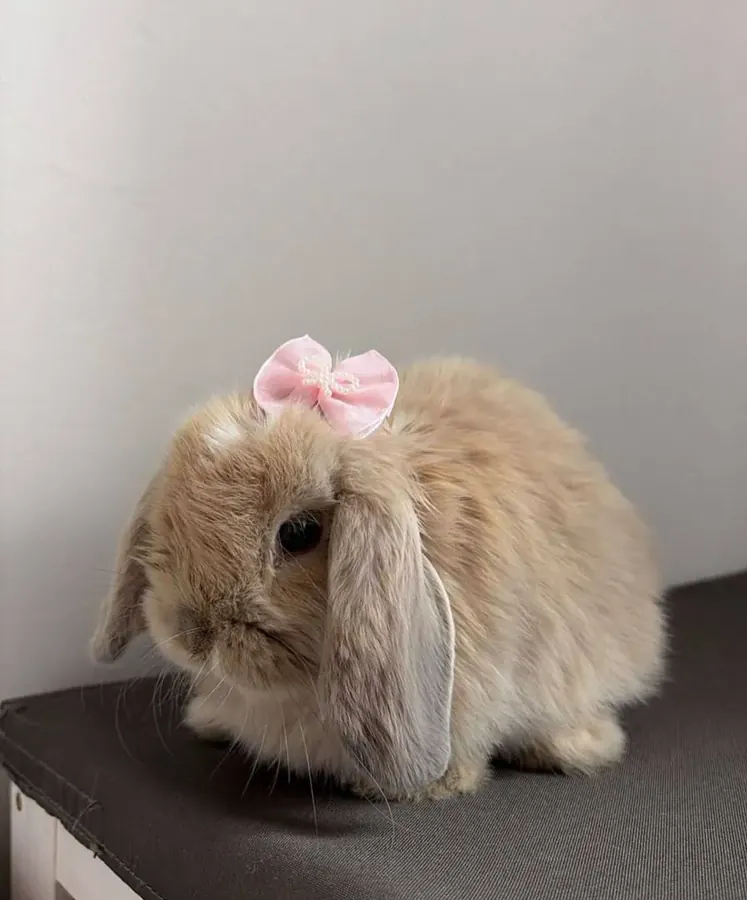
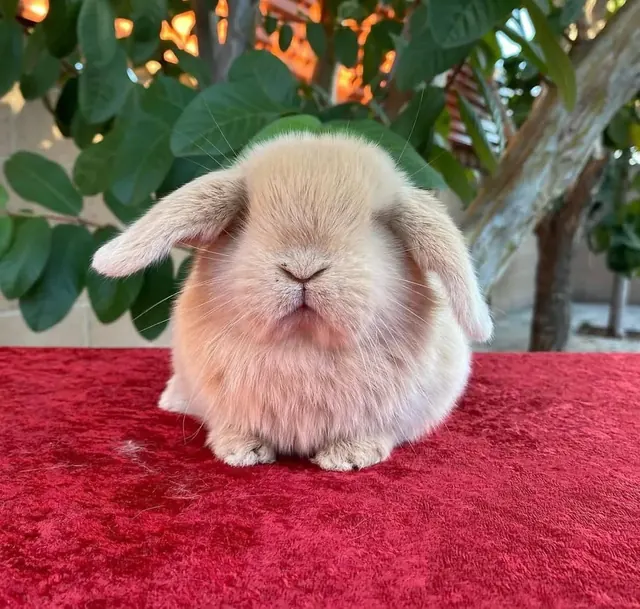
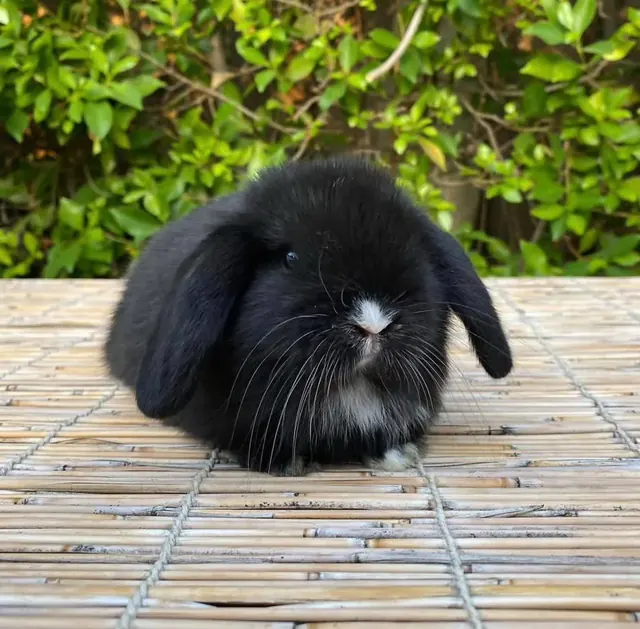
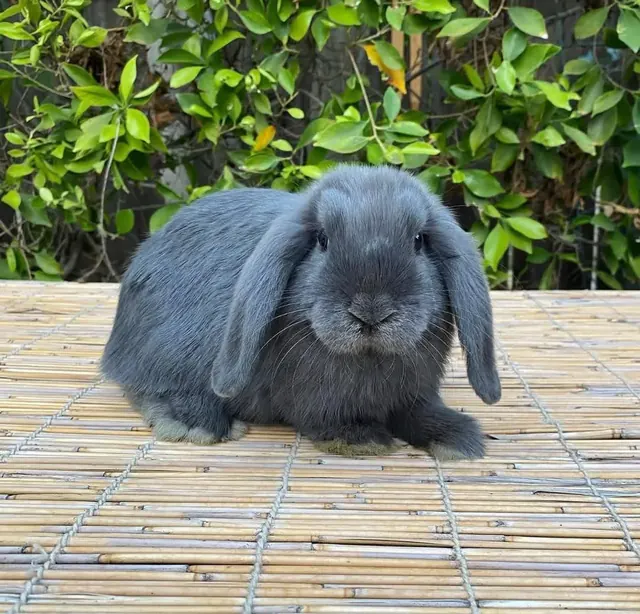
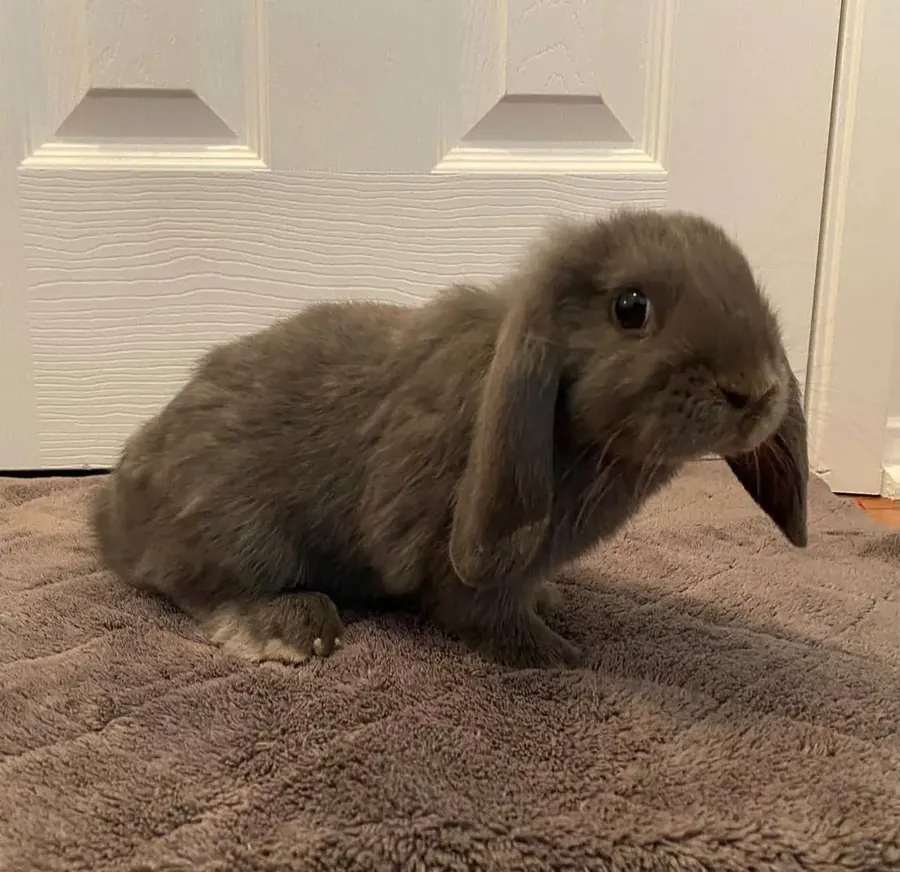
Sable Point Holland Lop and Siamese Sable Holland Lop
Sable is the Holland Lop color most affected by temperature. The sable allele (c^chl) makes pigment more readily in cool skin, so a sable point grows darker points and more body shading in a cold season and lighter, cleaner points in a warm one. The change shows up as new fur grows in, usually at a molt, not overnight.
Our sable kits grow up in the same climate-controlled barn as the rest of the herd, and we grade them at 8 weeks, when the points are defined enough to judge. Each sable point Holland Lop for sale is posted in the grid below, and pricing begins at $300 for a pet and $400 for show. If you want a Holland Lop sable doe for sale rather than any Holland Lop sable point for sale, check the sex on each card.
Kits leave no younger than 8 weeks, carrying a pedigree that goes back three generations and shows how dark the parents ran. Pick up from us in Texas, or we carry the kit on board to your closest major airport. Buying from a Holland Lop breeder who knows those parents is the best guide to the adult shade. Nothing sable posted? Add your name to the waitlist.
People who buy a pale, creamy sable point in summer are sometimes alarmed to see a much darker rabbit by February. Nothing has gone wrong. Sable is a color that records the temperature it grew in, and if you know that before you buy, you can predict roughly what your rabbit will look like each season.
Why Sable Point Holland Lop Color Depends on Temperature
The C gene controls tyrosinase, the enzyme that starts pigment production in each hair follicle. The full color allele (C) works at any normal body temperature. Further down the series, the alleles produce weaker versions of the enzyme. The Himalayan allele (c^h), the one behind pointed whites, makes a version that barely works at core body temperature and works well in cooler skin. The sable allele (c^chl) sits above Himalayan in the series and behaves like a milder form of it: pigment at all temperatures, but noticeably more of it where skin runs cool.
A rabbit's core temperature is roughly 101 to 103 F. The ears, nose, feet and tail run much cooler, and in a cold room they cool further. That gradient is why a sable point has points at all, and why the size and depth of those points move with the seasons.
One detail changes how owners should read this: pigment goes into each hair only while it grows. A finished hair does not darken. So a cold week does not turn your rabbit darker. The coat that grows during the cold weeks comes in darker, and you see it as the old coat sheds out.
Sable Holland Lop Color by Season, Temperature and Age
This is the pattern we track on sable points from the nest box through adulthood. Siamese sables and seals follow the same direction, with less contrast to show it.
Age or condition
Points
Body
What is going on
Birth to 1 week
None visible
Pink skin, then pale beige fuzz
Kits huddle in a warm nest of fur; there is little cool skin to color.
2 to 4 weeks
Faint gray brown on nose and ear tips
Pale beige
Kits leave the nest and the extremities cool. Points begin.
6 to 8 weeks
Defined sepia nose, ears, feet and tail
Ivory to light cream
Baby coat finished. This is the coat a buyer sees at go-home.
First molt, 8 to 16 weeks
Deeper, larger points
Settles to adult ivory or cream
Adult hair replaces baby fur. Often the biggest single jump in darkness.
Adult coat grown in warm months, rooms above about 78 F
Lighter sepia, softer edges
Clean, little shading
Warm skin slows the enzyme at the extremities.
Adult coat grown in cold months, rooms in the low 60s F or cooler
Darkest of the year, larger
Shading spreads onto the shoulders, saddle and sides
Cool skin across the body lets more pigment form everywhere.
Regrowth after a shave (for a vet procedure)
Not applicable
A darker patch where the fur was shaved
Bare skin runs cool while the new hair grows. It usually evens out at a later molt.
Older adult, 2 years and up
Slightly darker overall
A little more shading each year
Common in sables in our experience, and in other pointed animals.
Sun and coat age add a second effect on top. A sable coat near the end of its life can look rusty and brownish at the tips before it sheds, so a shift toward red is wear, not temperature.
A Texas Sable Point Holland Lop Bunny in a Cold State
Our kits grow up in a climate-controlled barn, so the coat a sable point leaves with was grown at steady, moderate temperatures. Then it goes home. Picture a sable point that flies to a family in a northern state in October and lives in a room that sits around 65 F through the winter, perhaps closer to a cold window or an outside wall. Its first molt happens in that room. The new coat comes in with points a shade or two darker, the dark color reaches further up the legs and ears, and a faint shadow appears across the shoulders. By spring, the owner has a noticeably smokier rabbit than the one in the pickup photos.
The reverse happens too. A sable kept in a warm house in a hot state tends to stay on the pale, clean end of its range. Neither is a health issue, and a rabbit that went dark in winter usually lightens partway again after a warm season molt. If you are in a cold state, our Minnesota Holland Lop page covers winter housing and flight delivery.
Siamese Sable Holland Lop and Seal: Darker Depths of One Gene
Sable point, siamese sable and seal are points along one scale, set by how many sable alleles the rabbit carries and whether it has full extension.
Sable point: the sable allele plus non-extension (ee), which keeps the dark color on the points and leaves an ivory to cream body. The most visibly temperature sensitive of the three, because the pale body shows every bit of creeping shade.
Siamese sable: one sable allele with full extension. Sepia head and back shading to tan sides and belly. Cold weather makes the back darker and the shading reach lower.
Seal: usually two sable alleles. So dark it can pass for black indoors, so seasonal change is hard to see. Seal is shown as a dark siamese sable.
Blue point Holland Lop and smoke pearl
Add the dilute gene and the browns become blue gray: a dilute sable point is the rabbit usually sold as a blue point Holland Lop, and a dilute siamese sable is a smoke pearl. A pointed white, by contrast, has a pure white body and ruby eyes from the stronger Himalayan allele, and its points swing with temperature even more; see our white and pointed white Holland Lop guide. Sable points also get confused with torts, which share the dark points but have an orange body, as our tort Holland Lop page shows.
Reading a Baby Sable Point Holland Lop Before the First Molt
At the nest box we can usually spot the sable family by the second week, when ear tips and noses tint gray brown while chestnut and black littermates are already dark. By 6 weeks we can say sable point, siamese sable or seal with confidence. What we cannot say at 8 weeks is how dark the adult will run in your house. Our best guide is the parents: a kit from two heavily shaded parents usually darkens more than one from a clean, pale pair, so ask to see both. A flashlight near the eye helps confirm the gene, because sables show a warm ruby glow in the pupil.
Sable kits we have available appear in the grid below. To compare them with other colors, browse all of our current Holland Lops.
Questions buyers ask
Why is my sable point holland lop getting darker
Most often because it grew new fur while it was cool. The sable gene lays down more pigment where skin is cooler, so a coat grown over winter, or in a chilly room, brings darker points and shading that can spread onto the sides. Age adds a little darkening too. The next coat grown in warm months usually comes in lighter again.
What is a siamese sable holland lop
A siamese sable Holland Lop is the darker cousin of the sable point: rich sepia brown on the head, back, ears and feet, shading gradually lighter down the sides to a tan belly. It carries one sable allele with full extension, so the color covers the body instead of staying on the points. It is shown in the ARBA Shaded group.
What is a blue point holland lop
The name is used for two different rabbits. Most often it means a dilute sable point: an ivory body with blue gray points instead of sepia. It can also mean a blue pointed white, which has a pure white body and ruby eyes from the Himalayan gene. Ask the breeder which one the pedigree lists, because they breed very differently.
Found your Holland Lop?
Fill out a short application so we can make sure it is a good match. We reply within 24 hours.