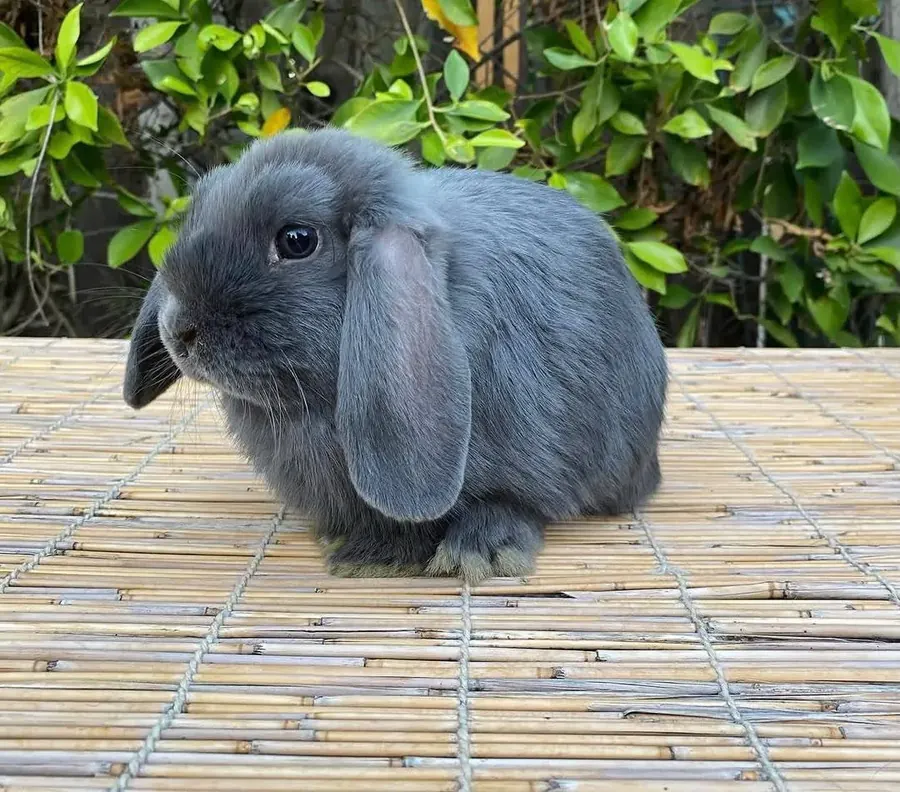
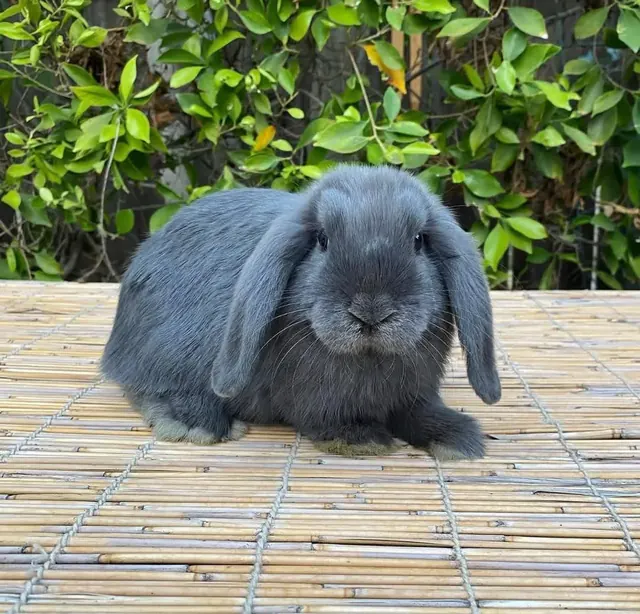
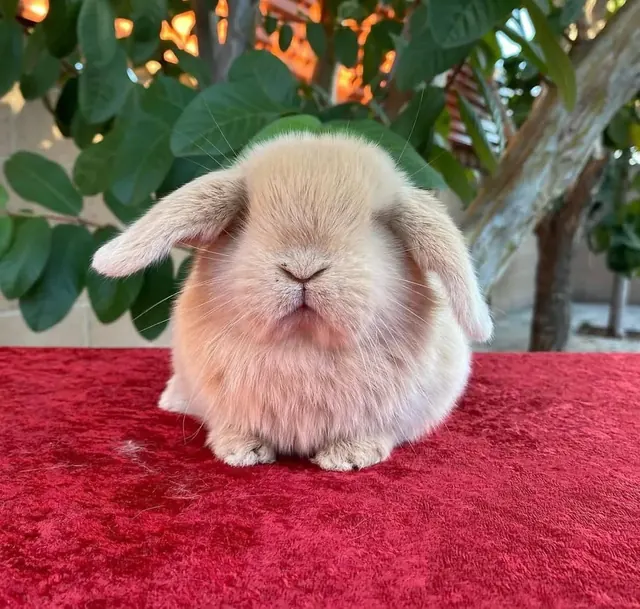
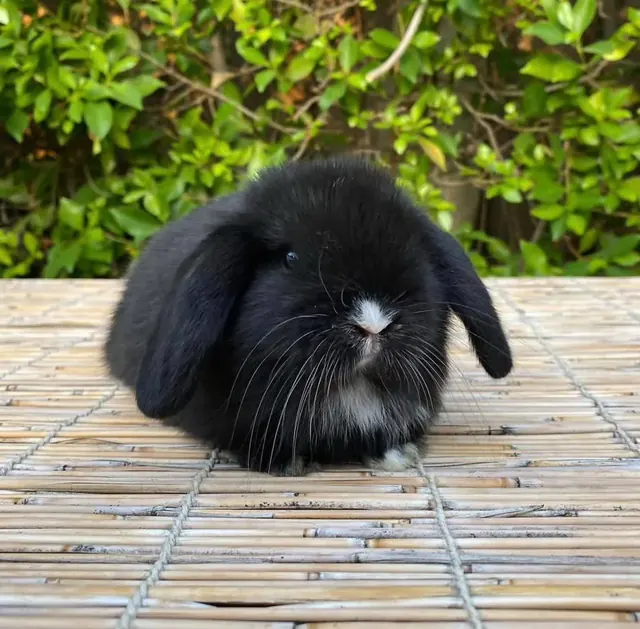
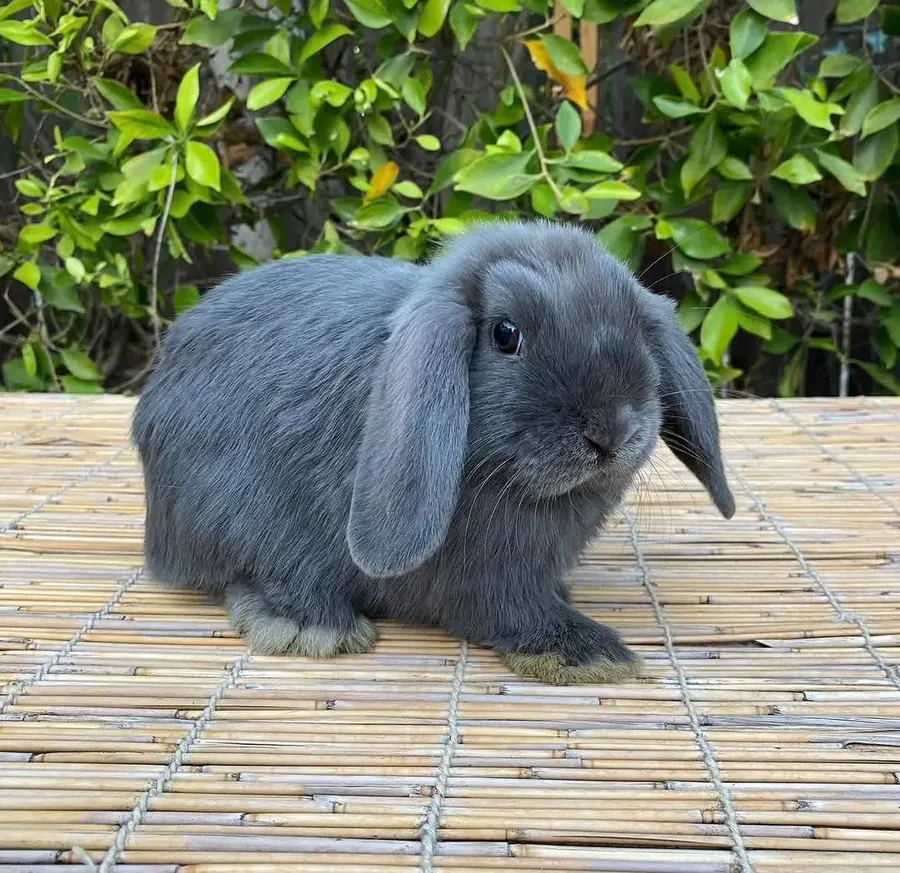
Blue Holland Lop Bunny and Blue Holland Lop Rabbit
Blue Holland Lop kits regularly turn up in litters from two black parents, because blue comes from a recessive dilute gene that a black can carry without showing it. When both parents carry one copy, roughly one kit in four comes out blue. The answers below follow the questions buyers ask us when they see it happen.
Blue Holland Lop bunnies for sale here are handled daily, litter-trained and sorted into a grade at 8 weeks. Every blue Holland Lop for sale comes with a birth certificate, care sheet and transition feed and leaves at 8 weeks or later. Grade sets the price, $300 upward for pets and $400 upward for show prospects, and a blue Holland Lop doe for sale costs the same as a buck of equal grade.
Searching for a blue eyed Holland Lop for sale? Self blues have blue-grey eyes; bright blue eyes come from Vienna, so tell us which you mean. Buyers looking for blue eyed Holland Lops for sale in Wisconsin, or any state, can choose in-cabin flight delivery to their nearest major airport, or pick up in Texas. If the grid below is empty, join the waitlist with a Holland Lop breeder who plans dilute pairings.
How Did Two Black Rabbits Have a Blue Holland Lop Bunny?
Every rabbit carries two copies of the dilute gene, one from each parent. The dense version, D, makes full strength pigment. The dilute version, d, clumps the pigment so the hair reflects less light, which turns black into slate blue. D wins whenever it is present. So a black with one of each (Dd) looks just as black as a black with two Ds, and nothing about the coat tells you it is a carrier.
When two carriers are paired, each passes on D or d at random. A kit that happens to get d from both sides has nothing to make full pigment, and it comes out blue. That is the whole trick. It is also why a blue can appear after several all black generations: the d copy rode along quietly until two carriers met. When we see a blue kit in a black litter, we write both parents down as proven dilute carriers.
How Many Blue Holland Lop Kits Should a Pairing Give?
These are the Mendelian odds for the dilute gene alone, on a self black base. The same ratios hold for any other color: swap black tort for blue tort, chocolate for lilac, chestnut for opal.
Parent 1
Parent 2
Blue kits (dd)
Black, carrying blue (Dd)
Black, not carrying (DD)
Black, DD
Black, DD
0%
0%
100%
Black, DD
Black carrier, Dd
0%
50%
50%
Black carrier, Dd
Black carrier, Dd
25%
50%
25%
Black, DD
Blue, dd
0%
100%
0%
Black carrier, Dd
Blue, dd
50%
50%
0%
Blue, dd
Blue, dd
100%
0%
0%
Read the percentages as odds per kit, not a fixed split. Two carriers can have a litter of four with no blues, or with two. The only pairing that guarantees blue is blue to blue. And because DD and Dd blacks look identical, the middle columns can only be sorted out later, by test breeding or by a blue kit showing up.
Which Kit in the Nest Box Is the Holland Lop Blue?
We can usually tell on the day the litter is born. Self black kits have dark charcoal skin. A blue kit's skin is a medium gray, clearly lighter, sitting next to them like a pencil sketch beside an ink drawing. A phone flash flattens the difference, so we check in daylight.
By day 7 the first fuzz confirms it. The black kits grow a short, soft black coat, while the blue grows a flat pewter one. At 3 to 4 weeks the blue still looks duller than an adult blue, which worries buyers who reserved from a photo of a grown rabbit. That flat look is baby fur, and the slate sheen arrives with the junior molt, usually between 8 and 16 weeks.
Does a Blue Holland Lop Have Blue Eyes or Blue-Grey Eyes?
Blue-grey. A self blue's eyes are a soft slate, close to the coat color, and in dim light they can look almost dark. That is correct for the color, and lilacs share it. The bright, clear, sky blue eye people picture when they search for a Holland Lop with blue eyes comes from a different gene entirely, Vienna, and you see it on a blue eyed white Holland Lop.
So if a blue kit has bright blue or marbled eyes, it carries Vienna as well as dilute. White on the muzzle or toes often comes with it, and that combination is what breeders call a blue VM (Vienna marked). Those disqualify a blue from showing but change nothing about health or personality. When buyers ask us for a blue eyed Holland Lop, we ask which blue they mean before we look at a litter.
Why Does My Blue Holland Lop Rabbit Look Brownish or Silvery?
Two causes, and neither is a problem with the rabbit. Old coat fades before it sheds, and on a blue that faded hair takes on a brownish cast along the back and ear tips, worse in sunny pens. A new coat clears it. The silvery look is usually lighting: cool LED light and camera flash bounce off a blue coat and wash out the slate. A blue Holland Lop rabbit photographed by a north facing window shows its real color.
Is a Blue Holland Lop the Same as a Grey One?
No. A self blue is one even slate color with a blue belly and no ticking. Buyers searching for a grey bunny often mean a chinchilla, which has silver ticked hair and a white belly, and we sort those out on our grey and chinchilla Holland Lop page. Dilute also turns up inside other colors, including blue tort, opal, squirrel and blue harlequin, all listed on the Holland Lop color chart.
Questions buyers ask
Is a blue holland lop dwarf smaller than a black one
No. Color has no effect on size. Every Holland Lop is a dwarf breed rabbit, and a blue grows to the same adult weight as a black from the same lines, with seniors topping out at 4 lbs under the ARBA standard. A blue can look slightly smaller in photos because the lighter coat shows less contrast against the background, but the scale will read the same.
Can a blue holland lop doe have black babies
Yes, if she is bred to a black buck. A blue doe can only pass on dilute, so the buck decides it. Bred to a black that carries no dilute, every kit is black and carries blue. Bred to a black that carries dilute, about half the kits are blue and half black. Bred to a blue buck, every kit is a dilute color.
Do blue holland lops need different care than other colors
Not really. Feeding, housing and handling are the same as for any Holland Lop. The one difference is coat color: a blue fades toward a brownish cast in direct sun, much like a black does. A pen away from bright windows, a weekly brushing and extra grooming while it sheds keep the slate color even.
Found your Holland Lop?
Fill out a short application so we can make sure it is a good match. We reply within 24 hours.